
Comparison
Digital vs paper visiting cards
On this page
Paper contact slips need no device and make a physical impression, but they go out of date and run out. Digital profiles are shared by link or QR code, can be edited any time, and carry more than a slip has room for. Many people carry both and use whichever suits the moment.
Side by side
The practical differences come down to a handful of everyday situations.
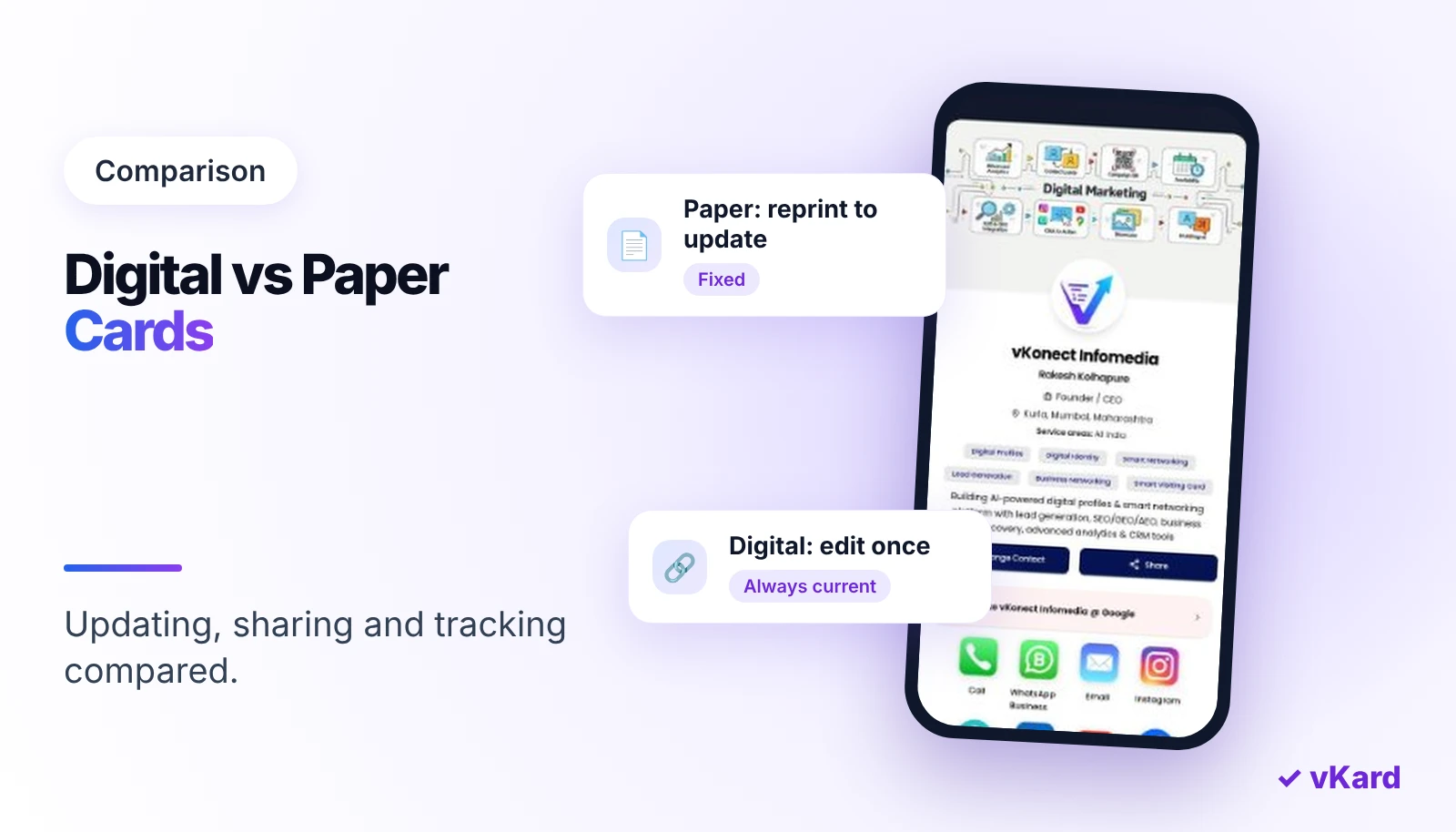
- Changing a detail: paper means reprinting; digital means editing one page.
- Running out: a paper stack is finite; a link or QR code is always with you.
- Space: paper holds what fits on a slip; digital can add links, images and more.
- Recipient effort: paper must be typed in later; digital can offer a save-to-contacts button.
- Needs a device: paper does not; digital needs a phone or screen to show the code.
When paper still wins
A paper contact slip needs no battery or signal, and some people simply prefer receiving something they can hold. At formal events or in places with poor connectivity, paper can be the more dependable choice.
When digital wins
If your role, number or links change often, or you meet many people in a day, a digital profile removes the reprinting and the retyping. It also lets you share to someone who is not in the room, by sending the link.
Frequently asked questions
- Are digital profiles replacing paper ones?
- Not entirely. They solve different problems: paper is tangible and needs no device, while digital profiles are easy to update and share remotely. Many professionals use both.
- Which is cheaper, a digital or a paper contact slip?
- Paper contact slips have a recurring printing cost every time details change or stock runs out. Digital profiles avoid reprinting, though some services charge for paid plans, so compare the actual plan you would use.
Related
Ready to try it?
Create your free vKard or find more answers in the FAQ.
Last updated 2026-10-04.